
The short answer: a Liebherr alarm is the control telling you the interior went out of range, and a fault code is the control naming a component it could not verify. A temperature alarm after a big grocery load or a door left open often clears on its own once the unit catches up. An alarm that keeps returning, or a fault code, points at airflow, the door seal, a fan, a sensor, or the sealed system. Match your symptom to the table below and you will know whether to wait it out or book a repair.
Understanding the Liebherr Lineup
Knowing your Liebherr line helps a Parts needs and availability are confirmed after model-specific diagnosis. The Monolith series is the fully integrated, built-in column platform, refrigerators and freezers that sit flush with cabinetry and rely on precise airflow and door seals. BioFresh is Liebherr's crisper technology, drawers held near freezing with controlled humidity to extend the life of produce, meat, and fish, and it depends on tight temperature control. Vinidor is the multi-zone wine cabinet line, with independently controlled zones for reds, whites, and serving temperatures. All three lean on the same family of sensors, fans, and defrost controls, which is why one guide can cover their alarms and codes together.
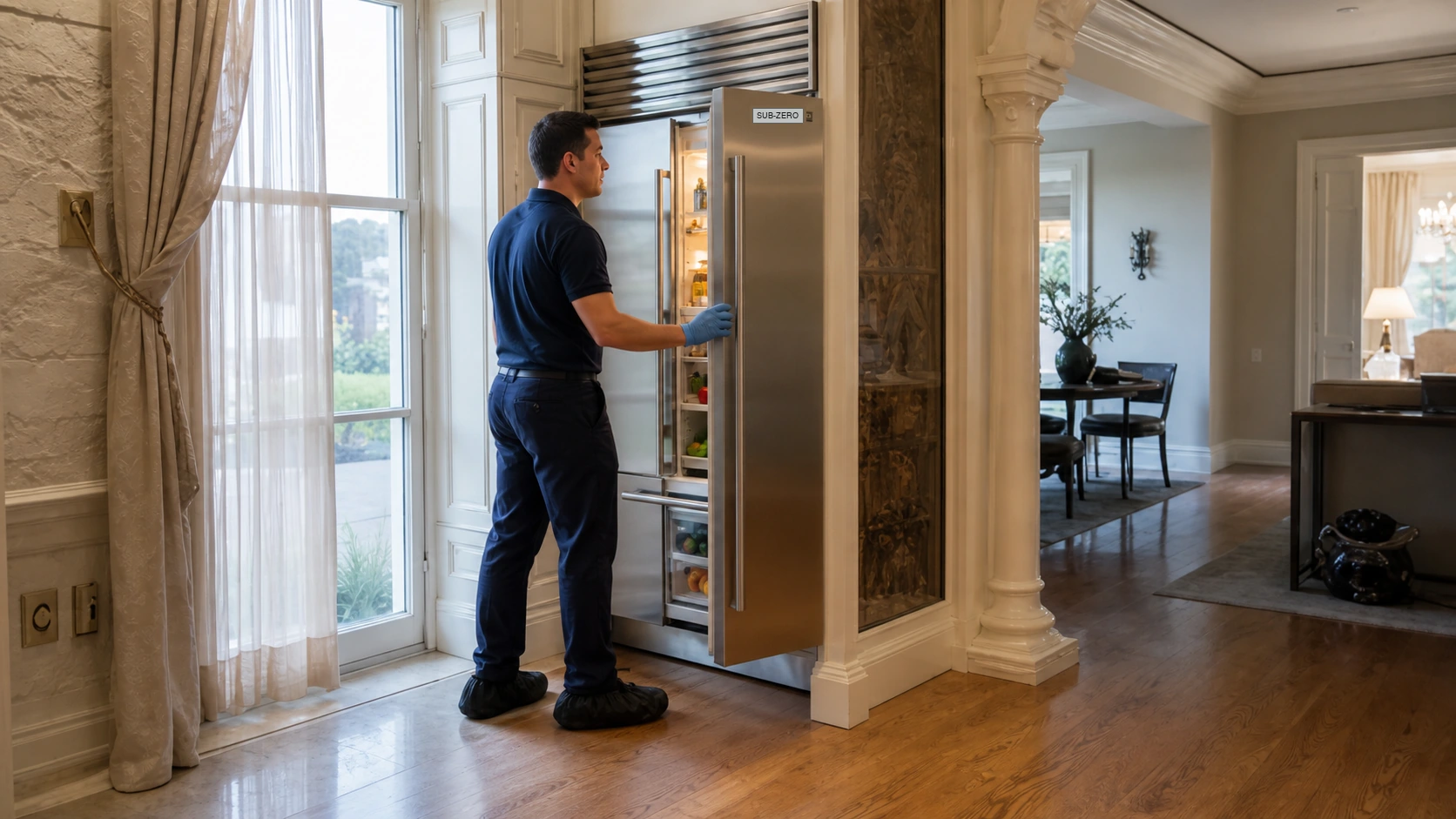
Liebherr Alarms and Fault Codes at a Glance
| Indication | System | What It Usually Means |
|---|---|---|
| Temperature alarm (audible + warmest temp) | Cabinet temperature | Interior rose above range; often a big load, long door opening, or power blip |
| Door alarm | Door / seal | Door left ajar or a worn gasket not sealing, letting warm air in |
| F/E sensor fault | Temperature probe | A temperature sensor reading out of range, so the control cannot trust the reading |
| F/E fan or defrost fault | Evaporator fan / defrost | Fan not turning or a defrost fault causing frost and uneven cooling |
| Warm despite running | Airflow / sealed system | Blocked vents, dirty condenser, or a sealed-system issue |
| Wine zone drifting | Vinidor zone control | Seal, zone fan, or sensor problem in a multi-zone wine cabinet |
Temperature and Door Alarms
The most common Liebherr indication is a temperature alarm, which pairs an audible tone with the warmest temperature the interior reached. This is often a normal response to life, a big grocery restock, a door held open while unloading, or a brief power interruption. In those cases the alarm clears once the unit pulls the temperature back down, and you can acknowledge it and move on. A door alarm is similar: it fires when a door is left ajar or when a gasket has worn and no longer seals. The honest first checks are to close the doors fully, wipe the gasket clean, and give the unit time to recover.
Sensor, Fan, and Defrost Codes
When a Liebherr shows an F or E style fault rather than a simple alarm, the control has found a component it cannot verify. A sensor fault means a temperature probe is reading out of range, so the control no longer trusts what it is seeing. A fan or defrost fault means the evaporator fan is not turning or the defrost cycle is not clearing frost, either of which leads to uneven cooling and ice on the coil. These are electrical faults that need a technician to test the sensor resistance, the fan motor, and the defrost circuit before replacing parts. You can see the full scope on our refrigerator repair page.
Vinidor Wine Cabinet Behavior
Wine storage is unforgiving of drift, so a Vinidor that will not hold a zone at temperature stands out quickly. The usual causes are the door seal, the fan circulating air across the zone, or a temperature sensor. Start by confirming the seal is clean and closing fully and that bottles are not blocking the vents. If the zone still will not settle, the fan, sensor, or sealed system needs testing.
When a Liebherr temperature alarm sounds, it shows the warmest temperature the interior reached before you clear it. Write that number down along with what happened, whether you had just loaded groceries, left a door open, or had a power blip. That single detail tells a technician whether the alarm was a normal recovery or a sign of a real airflow or sealed-system problem. A photo of the display works just as well. If the alarm returns after a normal recovery window, that repeatability is exactly what points toward a repair.
What a Technician Checks
When an alarm keeps returning or a fault code appears, the diagnosis follows the system named. For a returning temperature alarm, the door seals, condenser, evaporator fan, and defrost circuit are checked in order, and sealed-system pressures are evaluated if airflow is clear. For a sensor fault, the probe resistance is measured against spec. For a fan or defrost code, the motor and heater are tested. For a Vinidor zone, the seal, zone fan, and sensor are checked. Parts needs and availability are confirmed after model-specific diagnosis.
When to Call a Technician
Start with the simple checks. A temperature or door alarm earns closed doors, a clean gasket, and a recovery window before anything else. Call for service when an alarm keeps returning after a normal recovery, when an F or E fault code appears, when a wine zone will not hold temperature, or when the cabinet stays warm with clear airflow. Sensors, fans, defrost circuits, and sealed systems need proper testing and, where refrigerant is involved, appropriately qualified handling. Completed repairs include a 180-day repair warranty. Written terms are provided with the repair.
Frequently Asked Questions
What Does a Temperature Alarm on a Liebherr Refrigerator Mean?
What Are the E Codes on a Liebherr Fridge?
Why Is My Liebherr Wine Cabinet Not Holding the Right Temperature?
Related
Liebherr Repair
Monolith, BioFresh, and Vinidor refrigeration serviced across Brookville and Nassau County.
View brand → ServiceRefrigerator Repair
Sensors, fans, defrost circuits, and sealed-system diagnosis for luxury refrigeration.
View service → ProblemTemperature Fluctuation
Why a fridge drifts off temperature and how a tech tracks the cause down.
Read more →