
The short answer: True Residential refrigerators, wine columns, and beverage centers are built on commercial-grade forced-air refrigeration and are diagnosed by symptom rather than detailed numeric fault codes. The digital control shows temperature and basic alarms, but the technician confirms the failed part by testing the system. The most common True calls in Brookville are cooling loss, condensation or frost, and ice-maker faults, and coil cleanliness sits behind many of them.
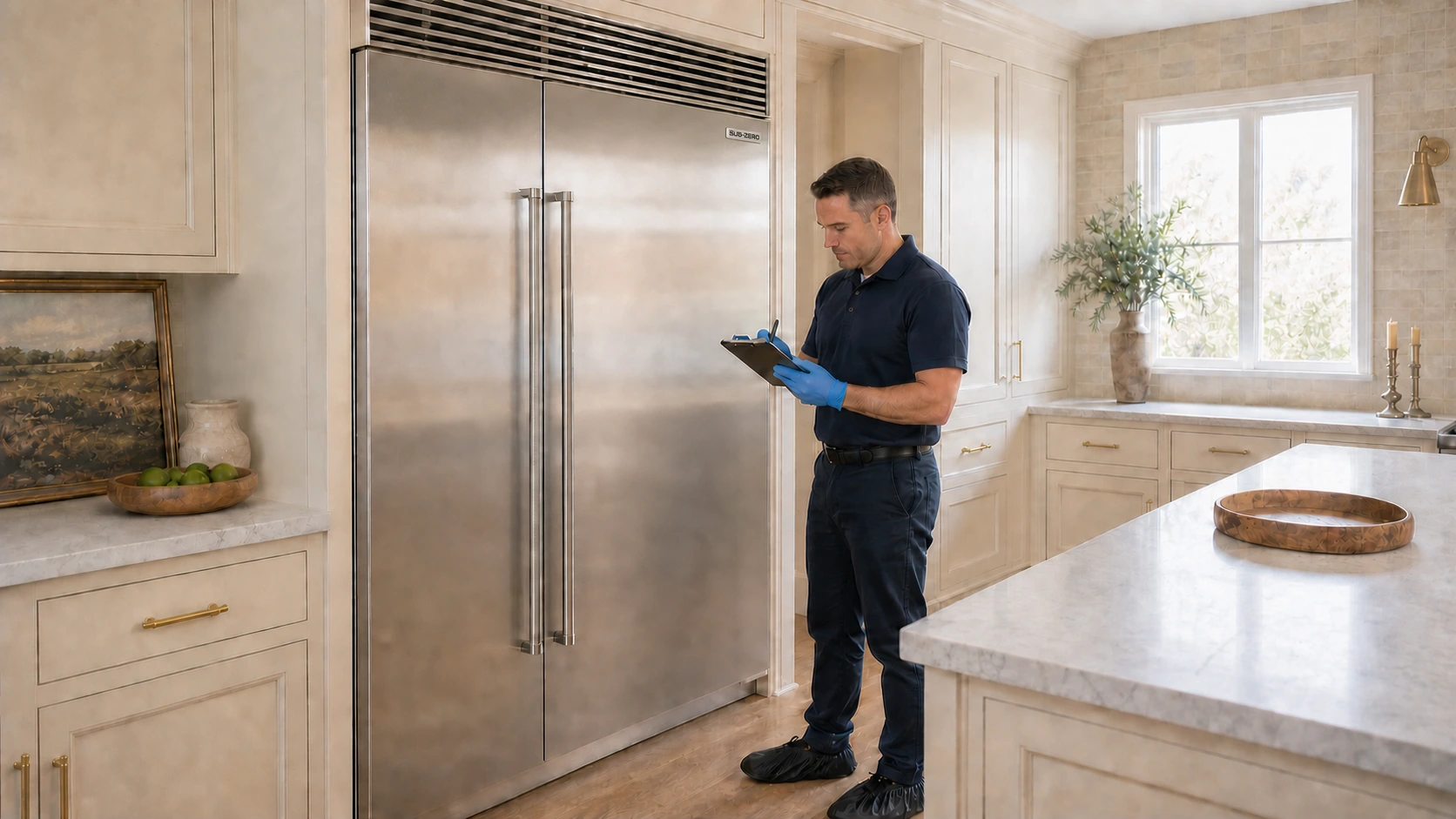
Why Coil Care Matters More on a True
True's residential units carry over the forced-air design from its commercial line, where a fan pushes air across a condenser coil to shed heat. That design is durable, but it depends on the condenser staying clean. In a busy kitchen, the coil pulls in dust and lint, and a clogged coil is the leading cause of cooling complaints on these units. Cleaning the condenser is both the best prevention and the first thing a technician checks.
Common True Symptoms and Causes
| Symptom | Likely Cause | Fix |
|---|---|---|
| Running but not cold | Dirty condenser, failed fan, or defrost fault | Clean coils; test fans and defrost circuit |
| Condensation or frost inside | Door seal not sealing, door ajar, or defrost fault | Reseat or replace gasket; test defrost |
| Ice maker not producing | Water inlet valve, frozen fill tube, ice-maker module | Thaw fill tube; replace valve or module |
| High-temp alarm | Overloaded, door left open, or cooling fault | Check load and door; diagnose if it persists |
| Compressor runs constantly | Dirty coils, weak seal, or low refrigerant charge | Clean coils; test seal and sealed system |
| Water pooling inside | Clogged defrost drain | Clear the drain line |
Cooling Loss
When a True runs but does not hold temperature, start with the condenser coil. A dusty coil chokes airflow and forces the compressor to run without keeping up. Clean it, then check the condenser and evaporator fans and the defrost system, which can ice over the evaporator and block cold air. If cooling does not return after cleaning, the fans, defrost circuit, or sealed system need a technician.
Condensation and Frost
Interior moisture or frost usually means warm, humid air is getting into the cabinet. The most common causes are a door gasket that is not seating, a door left slightly ajar by a full shelf, or a defrost fault. Check that the gasket is clean and closing fully. If the seal is good and frost keeps building, the defrost heater or thermostat needs testing.
Because True units use commercial-style forced-air cooling, the condenser coil is the part most worth your attention. Vacuum or brush it every three to six months, more often if the kitchen runs warm or the unit sits near cooking. A clean coil keeps temperatures stable, stops the compressor from running constantly, and prevents the majority of cooling and high-temperature alarm calls we see on these refrigerators.
Ice Maker Faults
On True units with ice makers, a stopped ice maker usually traces to a frozen fill tube, a failed water inlet valve, or a worn ice-maker module. Thawing the fill tube can restore production temporarily, but if ice stops again, the valve or module needs replacement.
Maintenance That Prevents True Repairs
Clean the Condenser Coil
This is the single most important habit on a True. A clean condenser keeps the forced-air system working as designed and prevents most cooling and alarm calls.
Keep the Door Seals Tight
Wipe the gaskets clean and check that they seat fully. A weak seal lets in humid air, drives condensation and frost, and makes the compressor run longer than it should.
DO Not Overload the Cabinet
Leaving room for air to circulate helps the forced-air system hold an even temperature and keeps items from blocking the door from closing.
When to Call a Technician
Handle the coil cleaning, seal checks, and drain clearing yourself. Call for service when a True stays warm after you clean the condenser, when a high-temperature alarm persists, when frost keeps building despite a good seal, or when the ice maker stops repeatedly. Sealed systems, fans, defrost circuits, and sensors need proper testing and, in some cases, appropriately qualified refrigerant handling. Every repair we perform carries our Written warranty terms for eligible completed repairs. Diagnostic and travel fees, if applicable, are confirmed before the appointment and before repair approval.
Frequently Asked Questions
Why Is My True Residential Refrigerator Not Getting Cold?
Do True Residential Refrigerators Show Error Codes?
Why Is There Condensation or Frost Inside My True Refrigerator?
Related
True Residential Repair
Refrigerators, wine columns, and beverage centers serviced across Brookville.
View brand → ServiceRefrigerator Repair
Cooling, defrost, and sealed-system diagnosis and repair for built-in refrigeration.
View service → ProblemNot Cooling
Why a refrigerator runs but will not hold temperature, and how dirty coils cause it.
Read more →